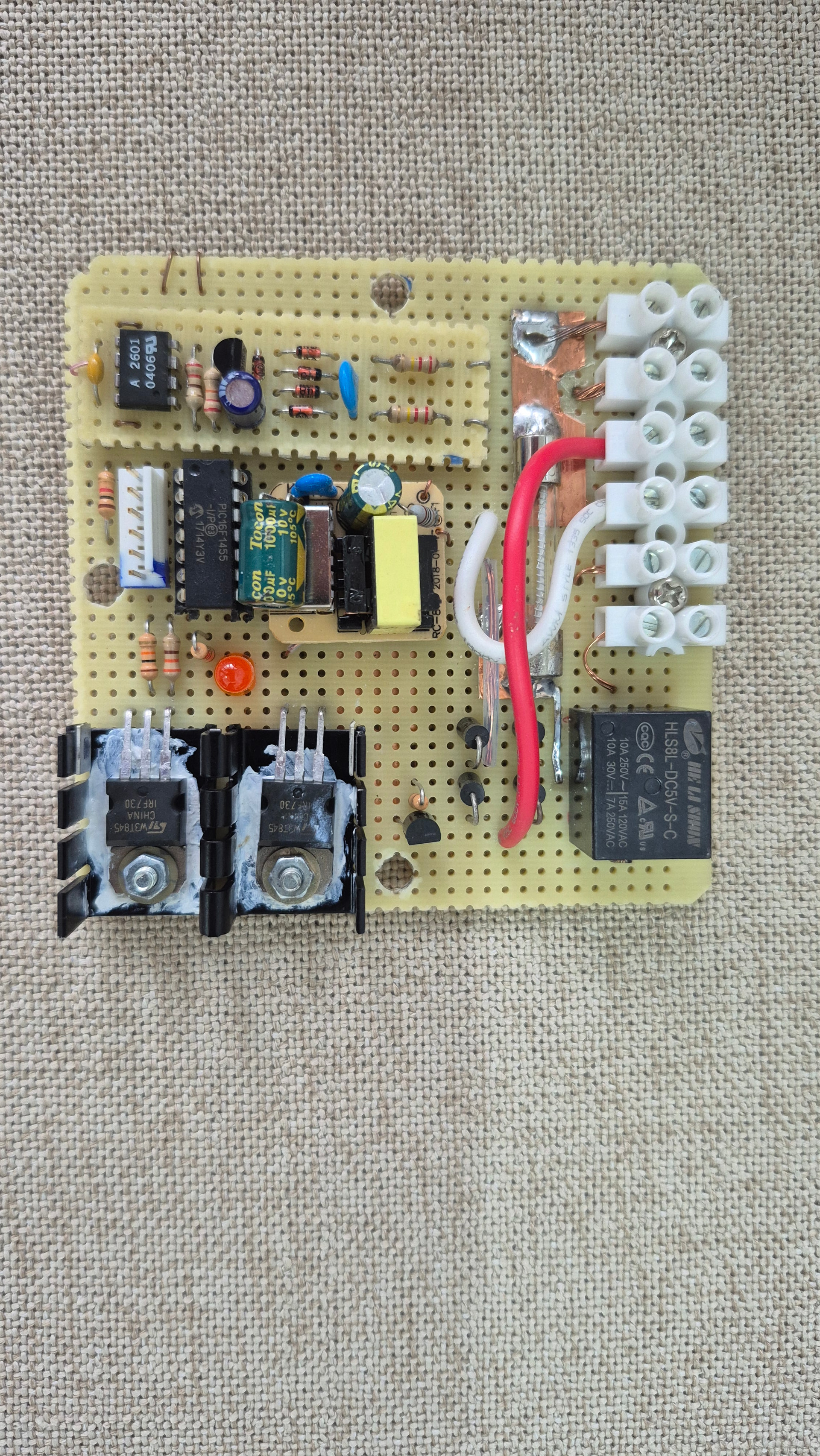
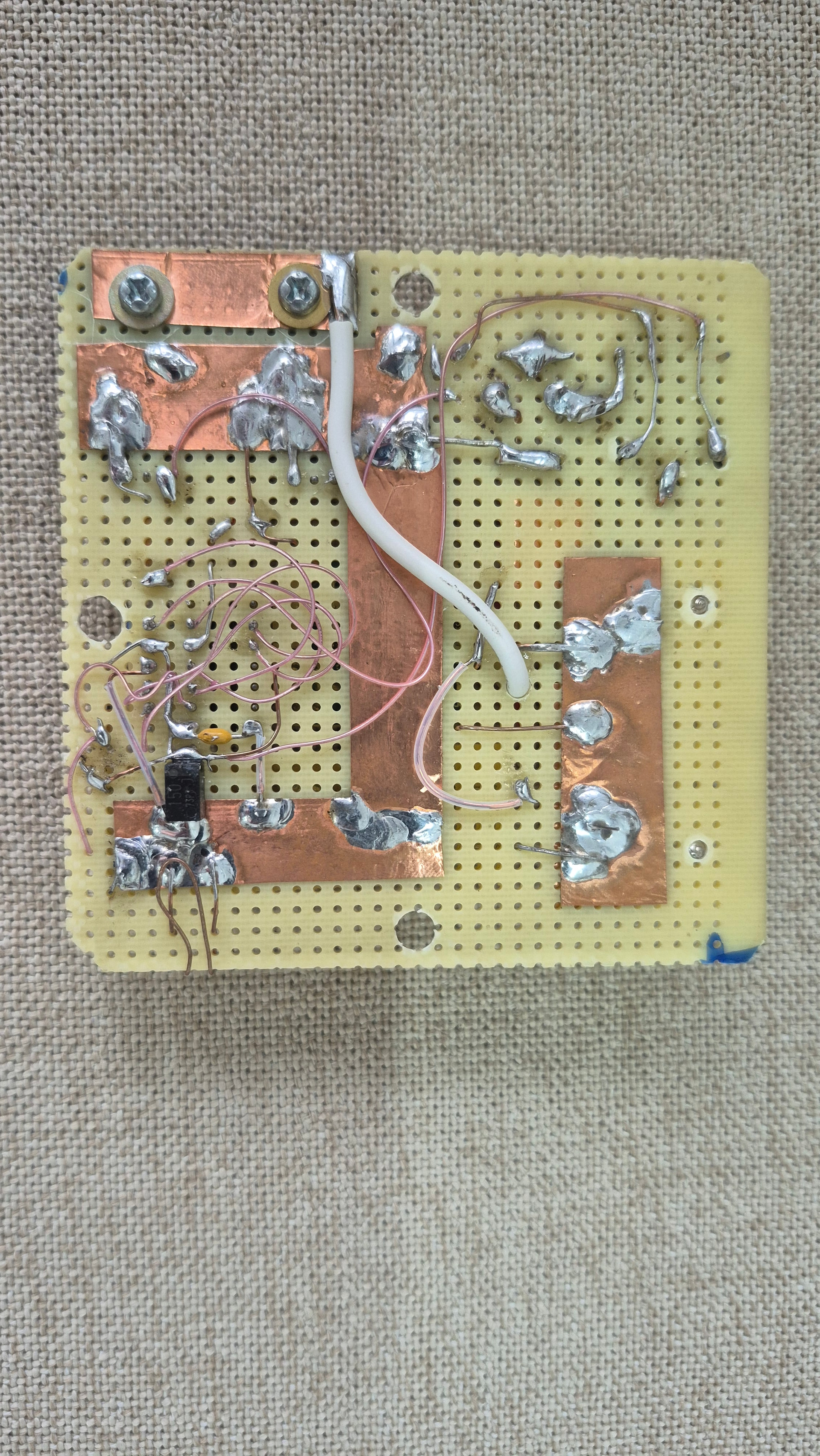
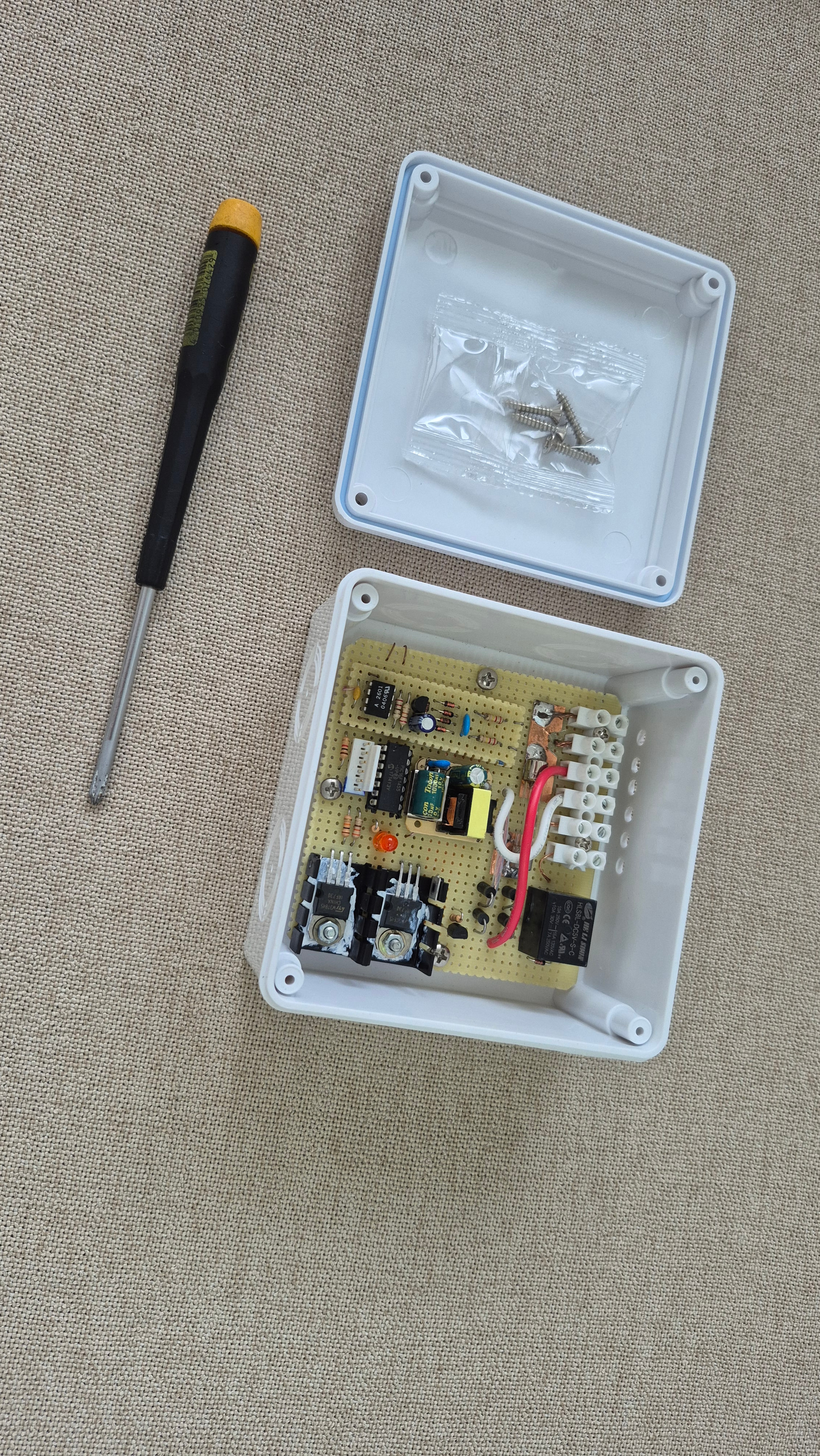
Our living room ceiling has a big cove around it with a bunch of sad white LED fixtures set inside.
I wanted to add a nice 230V LED strip light with a warm 2800 K color temp.
I wanted to leave the old lights in- yet be able to switch the nice warm LED strip on, and dim them, without having to tear up everything putting more wires in.
This board works as follows:
Power goes on- old white lights go on - default- via a little relay.
Flick the power off for 1 second:
Now the LED strip lights dimly and the white lights go off.
If left alone, the white lights slowly dim-up over a 15 second period, finally stopping at full brightness.
If you flick the power off for 1 second while it’s dimming up, it will hold that level when the power returns. This is how you set the dimming level.
Flick it off again, it returns to the old white lights.
I use an old USB charger as a 5V power supply, this can hold up it’s output for a few seconds when the power is cut, keeping things alive during a ‘flick’.
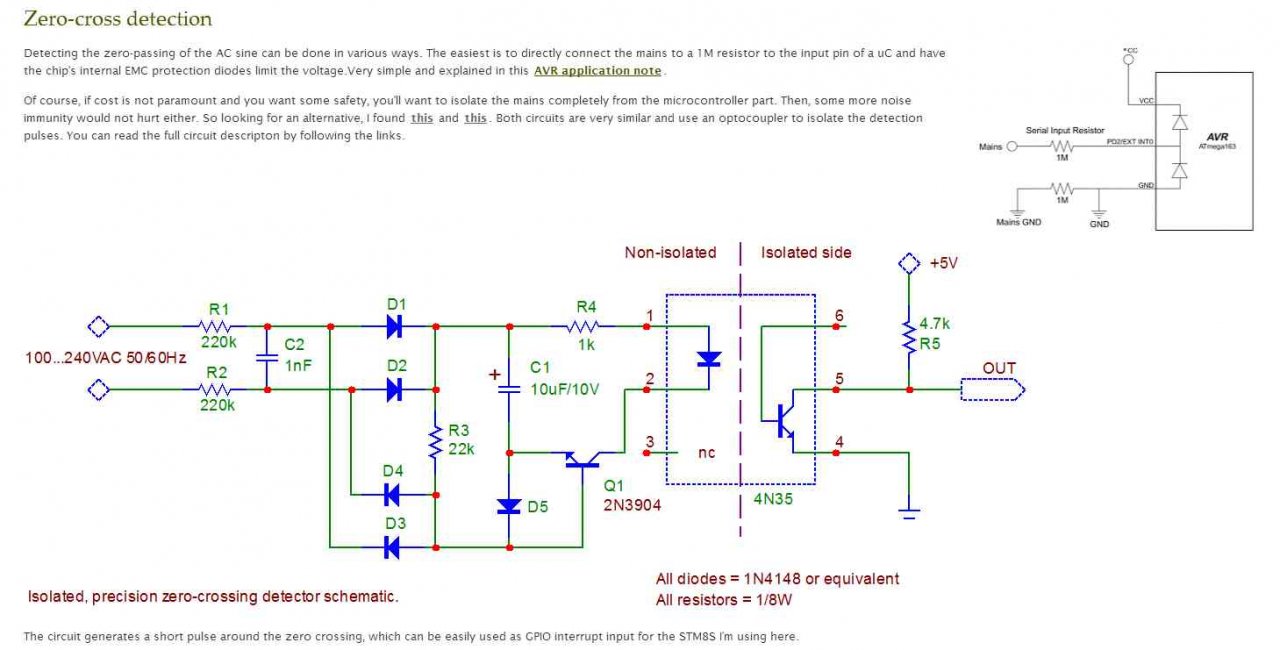
A zero crossing detector tracks the power failures and is also used to synchronize trailing edge dimming of the LED strip via a pair of MOSFETS.
The original switch now controls the whole setup - dimmable warm LED plus white - all with the same wiring.