Module Project: Capacitive Touch Switch Trigger Module
Project Related Files Here:
Challenges:
Design Challenge #1: Capacitive Switch Trigger Circuit Design
Watch the introduction video:
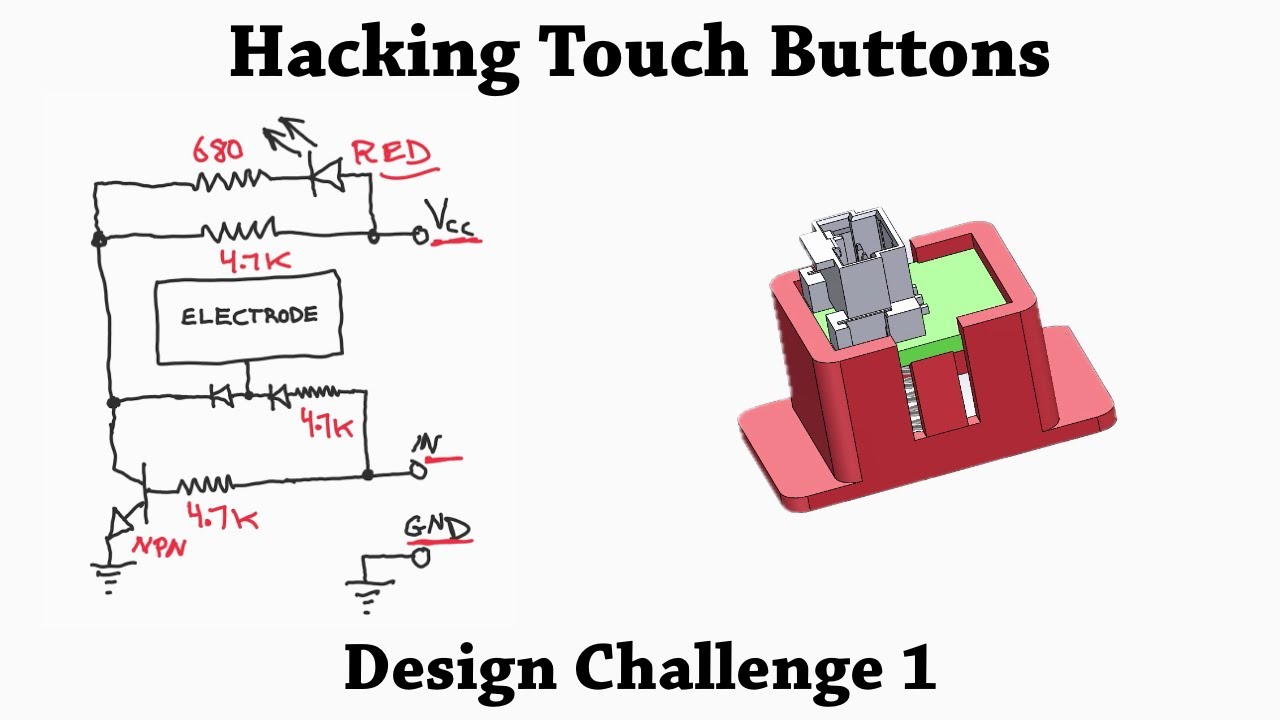
Final Module Video Update:
Watch the introduction video:
 YouTube Playlist (unlisted for now)
Flex seems like it would be a good solution, and is pretty cheap nowadays. Design-wise the main difference to normal PCB is avoiding sharp corners ( track and edges) to avoid stress concentration. Probably the main issue would be transitioning to wires robustly.
The outline is specced as a 0.5mm line, with ~1.mm gaps for breakout instead of mousebite holes.
For assembly, I just tape it to a piece of FR4 with kapton tape and process it like a normal PCB.
JLCPCB will do assembly on flex - I’ve done a few with then without issues. There is some extra cost for fixturing, and leadtime is about a week longer than rigid PCBA.
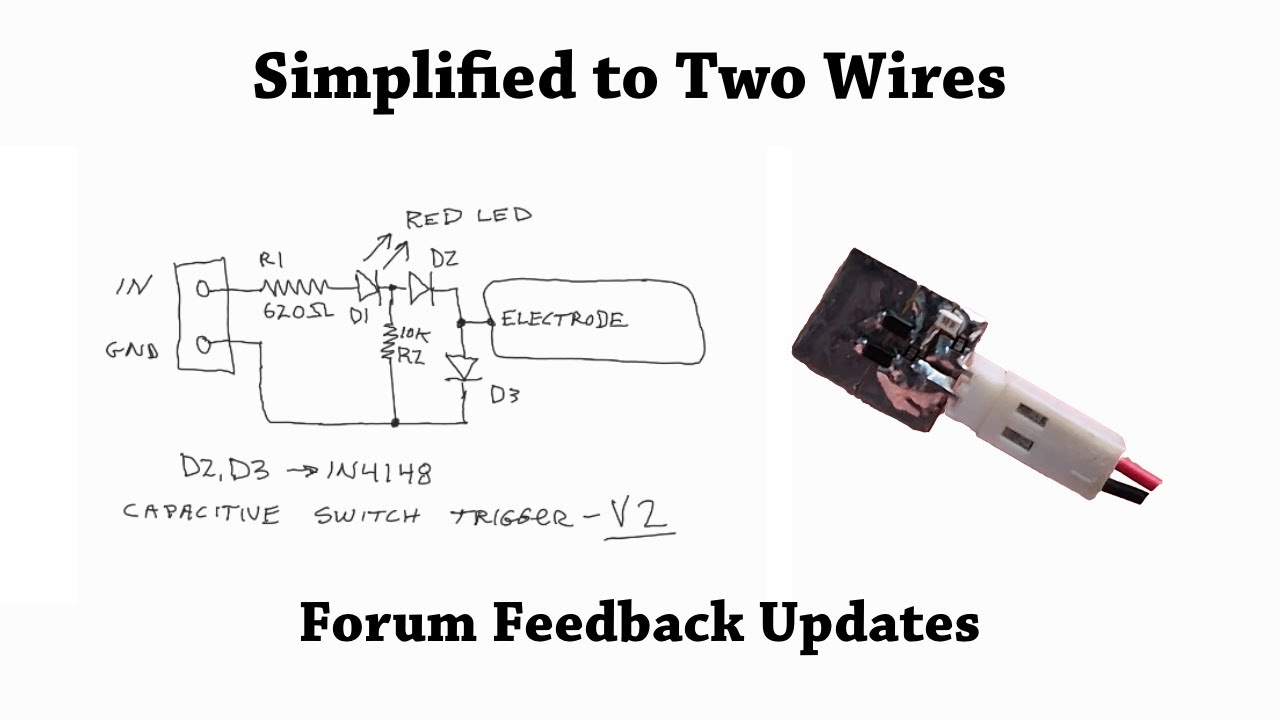
As regards the circuitry, it would be nice if the need for the bias supply could be eliminated - I wonder if something like a pair of back-to-back FETs might work, like a solid-state relay configuration, though static capacitance may be an issue.
An advantage of having all resistors the same is you can use x4 resistor networks, saving assembly cost. If you don’t need operation below 3.3v, using a white LED would allow the LED resistor to also be 4K7 as efficiency is much higher. And by using a dual diode, you could get it down to only 4 physical parts - diode,LED,R-Pack and transistor.
Another thought - if doing this for a large number of buttons, another approach might be to just have the diodes at the button, and use bipolar drive - this would just need a single common connection and one wire per button - savings on this would probably justify the added complexity of a bipolar supply.
Thanks for joining us! I am a big fan of your channel.
I like the idea of using an array of resistors and a dual diode to reduce the parts count, that’s a nice improvement.
I found this dual diode:
Toshiba 1SS226 this looks like a contender.
Your comment also got me thinking about a 2-wire solution, ideally not needing to reverse the polarity, just go from 0- 3.3V.
Pouring over parts now… thinking…
I suspect absolute off-mode capacitance may not actually be too big an issue, as cap sensing will typically self-calibrate over time to compensate for environmental and other factors.
Yes- I think the key is the ratio between the ON and OFF capacitance levels, these systems for sure have auto-cal, but we must not dilute the overall change-in-capacitance too much.
The capacitance between the appliance sensing electrode and the new stimulus electrode sets the bar, if our switch element has too much parasitic C, it might not work reliably.
It would be awesome if this could work with a simple FET or transistor with an open drain/collector on the stimulus electrode. The actual voltages on the stimulus electrode are probably small enough that they would not turn on a junction?
Perhaps a simple string of 4 diodes, going from zero bias, to forward bias?
I need to figure out how to MEASURE the super small capacitance in these circuits?